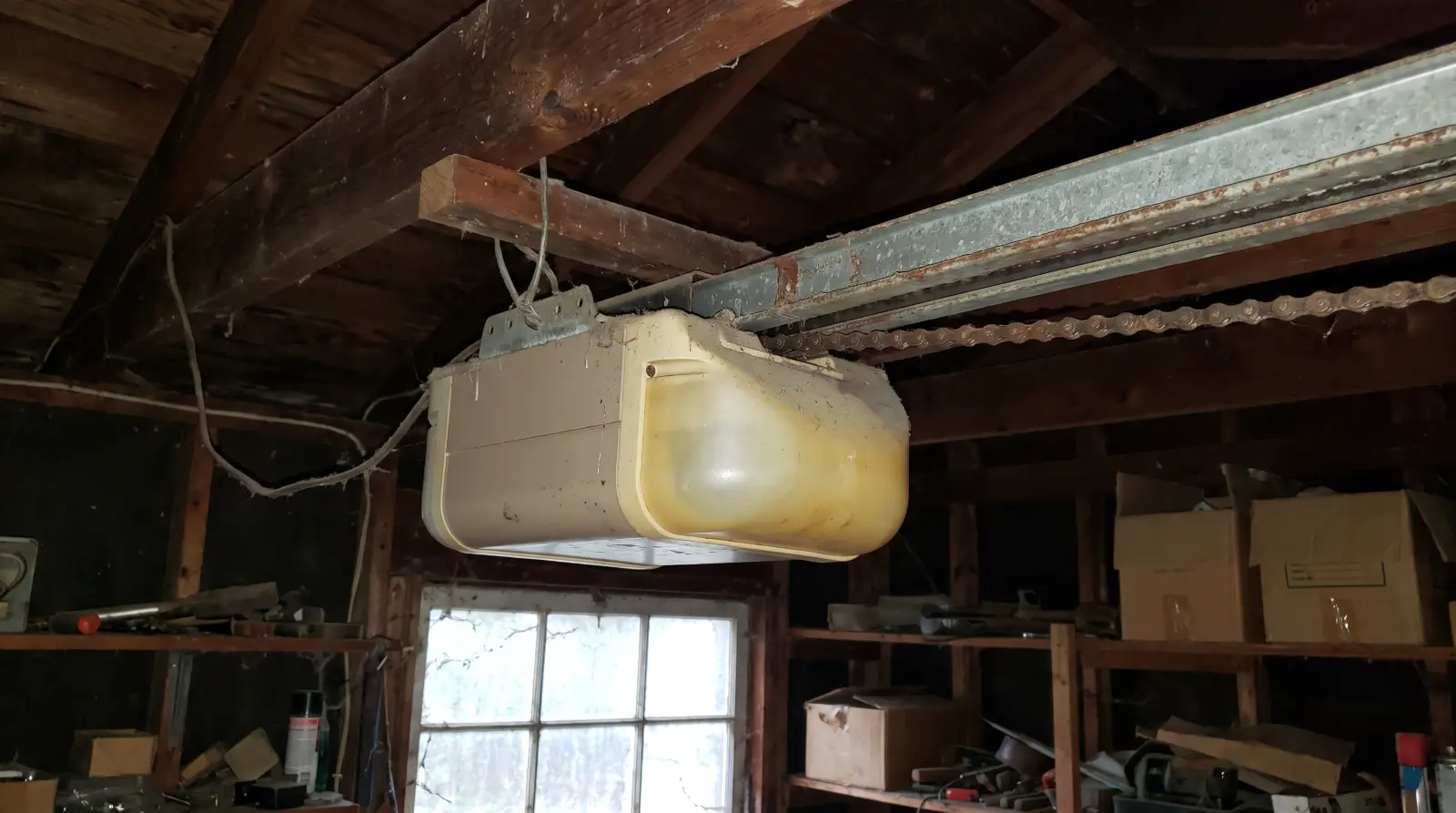
The opener is the part of the system you interact with, so it gets blamed first. But an opener only guides the door. The springs do the lifting. A door with a broken spring, a frayed cable or a frozen seal will make even a brand-new opener look broken. So the first job is working out which one has the problem.
Opener problem or door problem?
Pull the red release cord with the door fully closed, then lift the door by hand to about waist height and let go.
- If it lifts smoothly and stays roughly where you leave it, the door is balanced and the springs are working. The problem is most likely the opener.
- If it's very heavy, won't stay up, or slams down, the door is the problem, usually the springs. Lower it gently and stop there. Running an opener on an unbalanced door wears it out fast. See our broken spring guide.
If the door is heavy from the start, skip this test entirely and call. To reconnect, close the door and run the opener. The trolley will usually click back into place.
Common opener symptoms and what they usually mean
It hums but nothing moves
On chain and belt drive openers, a hum with no movement often means the main drive gear inside the motor head has stripped. These plastic gears wear down over years, and they tend to fail when the opener is working against a heavy or frozen door. It's a repairable part on many models. The other possibility is a seized motor or a failed capacitor.
It clicks but doesn't run
A click usually means the relay on the logic board is trying to start the motor. It can point to a failed board, a power surge, or a motor that won't start. Rhode Island summer thunderstorms and winter outages take out a fair number of opener boards.
The remote stopped working but the wall button works
Try a new battery. If that doesn't do it, the remote may need reprogramming using the learn button on the opener. If no remotes work, the receiver or the antenna wire hanging from the motor unit may be damaged.
It reverses before it hits the floor
Check the safety sensors first, then for ice or debris under the door. If those are clear, the close force or limit setting may need adjusting, which many owners can do from the manual. If the door is crooked, the problem is the door, not the opener.
It's very loud
Older chain drives are noisy by design. A new grinding or squealing noise usually comes from the door, not the opener: dry or rusted rollers, worn hinges, or a bent track. Lubricating the moving parts of the door is safe and often helps. The salt air and rust guide explains which parts to lubricate and which to leave alone.
It works in summer but struggles in winter
Cold stiffens the grease in the opener's rail and in the door's rollers and hinges, and a frozen bottom seal can hold the door down. The opener sees the extra resistance and stops. Check for ice first, then consider whether the door needs maintenance.
Opener humming, clicking or dead? Call and describe the sound.
Call (401) 498-DOORChain, belt, screw and wall-mount openers
| Type | Good to know |
|---|---|
| Chain drive | Durable, loud, still common in older Cranston garages. Noise carries into rooms above or beside an attached garage. |
| Belt drive | Much quieter. A good choice when there's a bedroom over the garage or the garage shares a wall with the living room. |
| Screw drive | Fewer moving parts, but some older units are sensitive to cold. |
| Wall-mount (jackshaft) | Mounts beside the door on the torsion bar. Useful for low ceilings and garages with storage overhead. |
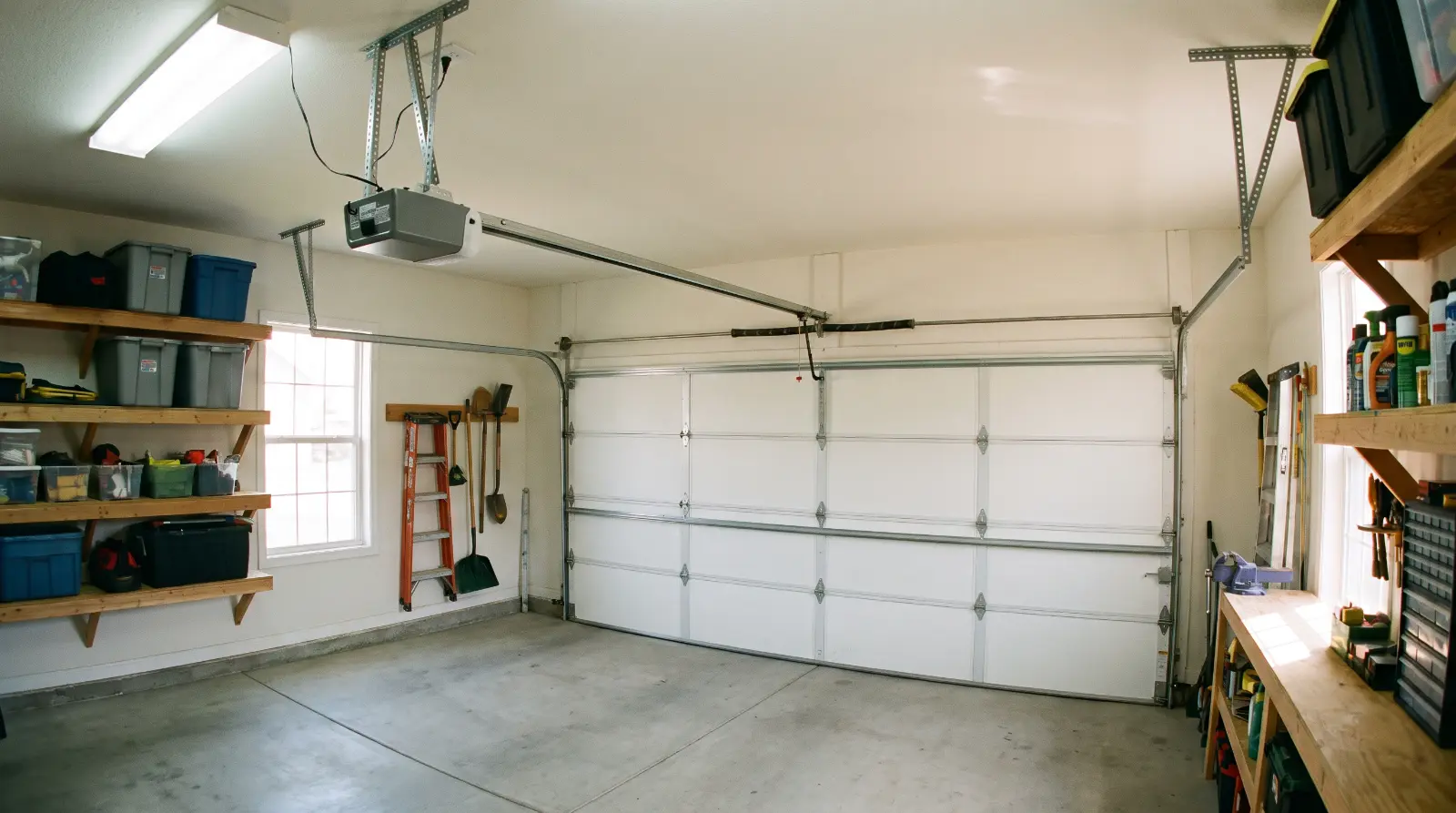
Repair or replace the opener?
There's no fixed rule, but these are the questions a technician will usually weigh:
- Age. Openers made before 1993 may not have the photo-eye sensors federal rules now require. An opener that old is usually worth replacing on safety grounds alone.
- What failed. A drive gear, a capacitor or a sensor is a normal repair. A failed logic board on an older model may be hard to source.
- Parts availability. Some brands and older models no longer have parts made for them.
- What you want. Quieter operation, battery backup for outages, or smartphone control can be reasons to replace even when a repair is possible.
Rhode Island loses power fairly often in nor'easters and summer storms. If your garage is your main way in and out, a battery backup is worth asking about. More on weighing old versus new is on our repair or replace page.
Safe things to try yourself
- Check the outlet, breaker and GFCI.
- Replace remote and keypad batteries.
- Clean and realign the safety sensors.
- Make sure the lock button on the wall control is off.
- Unplug the opener for a minute to reset it after a power outage.
Leave the motor head, the springs and the cables to a technician.
Common questions
How long do garage door openers last?
Many last 10 to 15 years, and some chain drives go longer. How long yours lasts depends on how often it's used, whether the door is kept balanced, and whether it has to fight a heavy or frozen door.
Why does my opener work with the wall button but not the remote?
Usually a dead remote battery or a remote that lost its pairing. Replace the battery, then reprogram with the learn button. If no remotes work at all, the receiver or antenna may be the problem.
Can a new opener fix a door that's hard to lift?
No. If the door is heavy, the springs or cables are the problem. A new opener on an unbalanced door will wear out early. Fix the door first.
Do I need battery backup on my opener?
It's worth considering if the garage is how you get in and out, especially with the power outages Rhode Island gets during storms. Ask the company whether your opener supports it.